
If you’ve ever skied at Wolf Creek Ski Area, you already know one thing — conditions here are different.
Wolf Creek isn’t a flashy mega-resort. It’s a snow mountain. And when we say snow, we mean real Colorado powder, frequent storm cycles, and terrain that can feel completely different from one day to the next.
Whether you’re planning a mid-February trip or checking the forecast before driving up the pass, understanding Wolf Creek snow conditions helps you bring (or rent) the right gear and actually enjoy your day on the mountain.
Let’s break it down — powder, groomers, packed snow, and what gear works best for each.
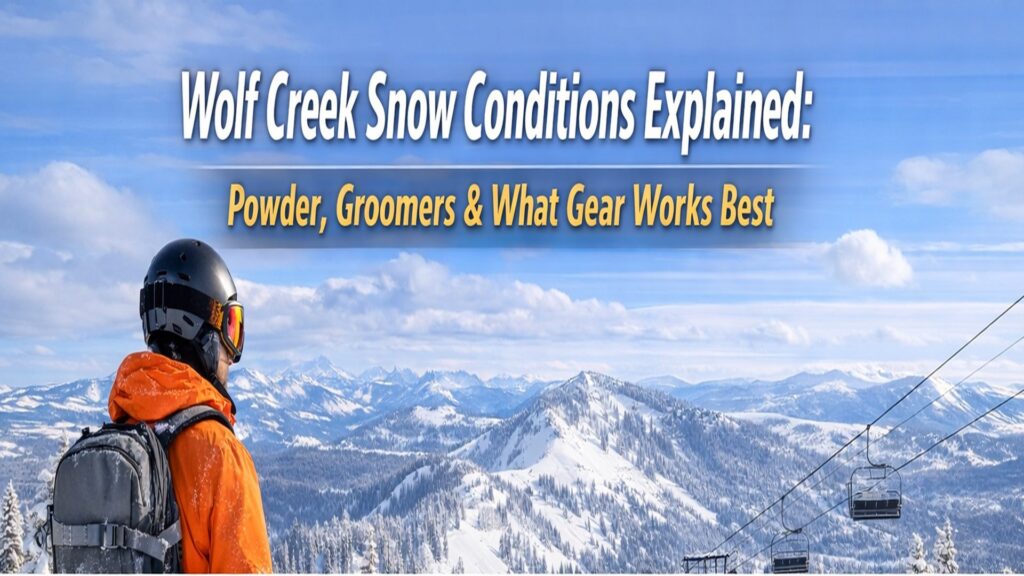
Understanding Wolf Creek Snow Conditions (Before You Check the Snow Report)
Wolf Creek averages some of the highest annual snowfall in Colorado — often over 400 inches per season. That alone sets it apart.
But snowfall totals don’t tell the full story.
Snow conditions here are shaped by:
- Elevation (base over 10,000 feet)
- Frequent storm cycles
- Wind exposure
- Temperature swings
A 6-inch overnight storm at Wolf Creek often skis better than 10 inches at lower-elevation resorts because the snow stays light and dry.
By mid-February, the mountain typically has:
- A solid base depth
- Regular refresh cycles
- A mix of powder stashes and well-settled packed powder
If you’re planning your route up the pass, especially after a storm, you’ll also want to factor in road conditions. Here’s a practical guide on driving to Wolf Creek Ski Area that covers what to expect.
Wolf Creek Powder Conditions — What “Powder Day” Really Means
When people talk about Wolf Creek, they’re usually talking about powder.
What Is Powder Snow?
Powder is freshly fallen, low-density snow that hasn’t been packed down yet. It’s light, soft, and floats when you ski it correctly.
At Wolf Creek, powder tends to be:
- Dry
- Cold
- Preserved longer than at many resorts
Because of frequent storms, powder days aren’t rare here — especially in January and February.
What Makes Wolf Creek Powder Unique?
Unlike some resorts where powder gets tracked out quickly, Wolf Creek has:
- Natural tree zones
- Less crowd pressure than I-70 resorts
- North-facing terrain that holds snow longer
You’ll often find soft snow days after the storm has passed.
Skiing in Powder: What Most Visitors Get Wrong
If you’re new to deep snow, powder can feel intimidating.
Common mistakes:
- Leaning too far back
- Using narrow carving skis
- Wearing the wrong goggles for flat light
- Not adjusting speed
If you’re visiting for the first time, this pairs well with our guide on first-time skiing tips at Wolf Creek so you know what terrain to choose.
Best Skis for Powder at Wolf Creek
For true powder conditions:
- Look for 100mm+ underfoot width
- Rocker in the tip (and sometimes tail)
- Slightly softer flex
Wider skis help you float instead of sink. If you’re unsure what width makes sense for the current storm cycle, that’s where local rental advice becomes valuable.
If you’re staying in Pagosa Springs, here’s what you should know about Wolf Creek ski rentals in Pagosa Springs before heading up.
Groomers at Wolf Creek — Smooth, Fast & Often Overlooked
Not every day is a powder day.
After storms settle or during clear high-pressure stretches, you’ll see beautifully groomed runs.
What Are Groomed Trails?
Groomers are mechanically smoothed runs. At Wolf Creek, they’re often:
- Packed powder
- Edge-friendly
- Fast in the morning
Early corduroy laps here can be incredible.
Best Skis for Groomed Trails
For groomed snow:
- 80–95mm underfoot
- Stiffer flex
- Strong edge hold
Carving skis shine on groomers. If you bring only wide powder skis, they’ll feel less responsive on firm mornings.
Packed Powder vs Deep Snow — Why the Difference Matters
Most February days at Wolf Creek aren’t bottomless powder — they’re packed powder.
Packed powder means:
- Snow has settled
- Surface remains soft
- Good grip and control
This is where all-mountain skis (mid-90mm range) work beautifully.
What Skis Should You Use in Powder vs Packed Conditions?
Here’s a simple breakdown:
- 6”+ fresh overnight snow → 100mm+ powder skis
- Settled storm, soft surface → 90–100mm all-mountain skis
- Dry stretch, firm mornings → narrower carving ski
If you snowboard, gear choice matters too. Our Wolf Creek snowboard gear guide covers board shape and setup for storm versus groomer days.
What Gear Works Best for Wolf Creek Conditions
Skis matter. But your comfort depends just as much on clothing and visibility.
Goggles
Wolf Creek often has:
- Flat light during storms
- Bright bluebird days after storms
Bring lenses for both if possible:
- Yellow/rose for storm days
- Dark tint for sunny days
Jackets & Layers
At 10,000+ feet, temperatures change fast.
You’ll want:
- Waterproof outer layer (10k–20k rating minimum)
- Breathable mid-layer
- Proper base layer (avoid cotton)
Storm days here can mean sideways snow and wind. Cheap outerwear shows its weakness quickly.
Gloves & Face Protection
Powder days mean snow in the air. Waterproof gloves and a proper face covering are essential.
How to Plan Gear Based on the 3-Day Snow Forecast
Don’t just look at inches of snowfall.
Also check:
- Wind speeds
- Temperature trends
- Storm timing
Example:
- Storm ends overnight → deep morning powder
- Storm during the day → flat light + variable visibility
- 3 clear days after storm → soft packed powder mornings, firmer afternoons
Gear decisions should match that pattern.
Mid-February Conditions at Wolf Creek (What to Expect Right Now)
Since you’re reading this in mid-February, here’s what typically applies this time of year:
- Strong base depth
- Frequent refresh cycles
- Powder pockets still available
- Packed powder on main runs
February is one of the most reliable months for snow quality at Wolf Creek.
Quick Snow Condition Cheat Sheet
| Condition | Best Ski Type | What to Wear | Skill Focus |
| Fresh Powder | 100mm+ width | Waterproof shell, storm goggles | Balance + float |
| Packed Powder | 90–100mm all-mountain | Standard layering | Edge control |
| Groomed Corduroy | 80–95mm carving ski | Lighter layers | Carving technique |
| Storm Day | Wider skis | Full waterproof gear | Visibility awareness |
FAQs About Wolf Creek Snow Conditions
1. How are Wolf Creek snow conditions in mid-February?
Mid-February is typically prime season. The base is well-established, storms are frequent, and you’ll often find a mix of fresh powder and soft packed powder. It’s one of the most consistent times of year for quality snow.
2. Is Wolf Creek better for powder or groomers?
Wolf Creek is known for powder, but groomers here are excellent — especially the morning after a storm. You can enjoy both depending on the weather cycle.
3. What skis should I rent for Wolf Creek?
If fresh snow is in the forecast, consider wider powder skis (100mm+). For most February days, a versatile all-mountain ski in the 90–100mm range works extremely well.
4. Does Wolf Creek get icy?
Compared to many resorts, true icy conditions are less common because of frequent snowfall and colder temperatures. Firm mornings can happen after dry spells, but ice isn’t typical.
5. Are snowboard conditions good at Wolf Creek?
Yes — especially on powder days and in tree terrain. Board choice matters based on snow depth and terrain preference.