
Driving to Wolf Creek Ski Area is part of the experience—and for many skiers and riders, it’s a big reason they fall in love with this corner of southern Colorado. Unlike the busy I-70 resorts, Wolf Creek feels remote in the best way: wide-open highways, mountain scenery, and a true high-alpine pass that reminds you you’re headed somewhere special.
That said, driving to Wolf Creek isn’t something you want to wing—especially in winter. The weather can change fast, the pass is high and exposed, and knowing what to expect can make the difference between a stress-free ski day and a white-knuckle drive.
This local-style guide covers everything you need to know before driving to Wolf Creek Ski Area—from the best routes and winter road conditions to parking, timing, and smart preparation tips locals swear by.
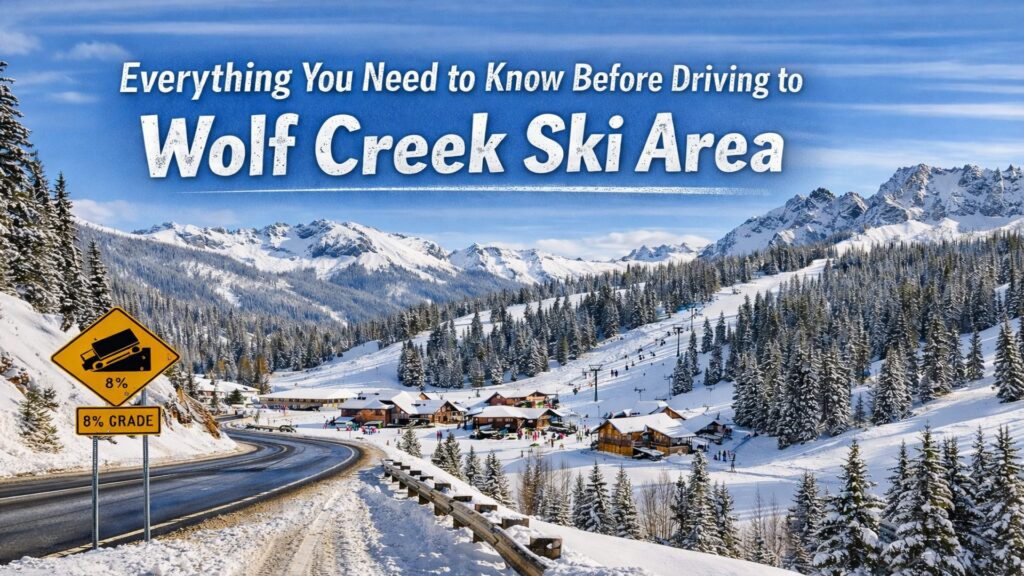
Where Is Wolf Creek Ski Area?
Wolf Creek Ski Area sits in southwestern Colorado, high in the San Juan Mountains, right on U.S. Highway 160 at the top of Wolf Creek Pass. It’s roughly halfway between Pagosa Springs and South Fork, making it easily accessible from either side of the pass.
One thing first-time visitors quickly notice: Wolf Creek is not surrounded by condos or base villages. There’s no town at the base—just mountains, snow, and a parking lot steps from the lifts. That simplicity is part of its charm, but it also means planning your drive matters more here than at destination resorts.
If this is your first visit, it’s worth reviewing these first-time skiing tips for Wolf Creek so you know what to expect once you arrive. Wolf Creek skis differently than many Colorado resorts, and preparation starts before you ever hit the pass.
Best Routes to Drive to Wolf Creek Ski Area
From Pagosa Springs (Most Popular)
If you’re staying in Pagosa Springs, this is the route most locals and visitors take.
- Distance: ~24 miles
- Drive time: 35–45 minutes (weather dependent)
- Route: U.S. 160 East
This drive steadily climbs through forested terrain before opening up into classic alpine views near the summit. Roads are well maintained, but snowpack can build quickly after storms. Morning drives are usually smooth, especially if CDOT plows have already passed through.
Most visitors staying in town choose to pick up gear first—this local guide to Wolf Creek ski rentals in Pagosa Springs explains why it makes mornings faster and less stressful.
Why this route is preferred:
- Easier grade overall
- More services (gas, food) before heading up
- Great option for families and first-time visitors
From South Fork, CO
South Fork is closer in mileage, but the terrain is steeper.
- Distance: ~16 miles
- Drive time: 30–40 minutes
- Route: U.S. 160 West
This side of Wolf Creek Pass can feel more rugged, especially during or right after snowstorms. Locals are comfortable with it, but visitors should pay attention to traction requirements and weather updates.
From Durango, CO
Flying into Durango? This is a common approach.
- Distance: ~85 miles
- Drive time: 2–2.5 hours
- Route: US-160 East
The drive is scenic and generally straightforward, but winter storms can extend travel times. If you’re arriving late in the day, consider staying overnight in Pagosa Springs before driving the pass in daylight.
From Denver
Wolf Creek isn’t an I-70 ski trip.
- Distance: ~280 miles
- Drive time: 5.5–6.5 hours (or more in winter)
Most Denver drivers come via US-285 South, then connect to US-160. Plan fuel stops carefully and build in buffer time—this is a long mountain drive, not a quick weekend hop.
Driving Over Wolf Creek Pass: What to Expect
Wolf Creek Pass tops out at 10,857 feet, making it one of the higher paved mountain passes in Colorado. That elevation means:
- Snow can fall earlier and stick longer
- Winds can create drifting snow
- Conditions can vary dramatically from one side of the pass to the other
Unlike interstate passes, Wolf Creek Pass feels wild and exposed—especially during storms. The road is well plowed, but drivers should be comfortable with winter mountain conditions.
Winter Road Conditions & Safety Tips
How to Check Current Conditions
Before you leave, always check:
- CDOT road conditions for US-160 Wolf Creek Pass
- Local weather forecasts (not just your phone’s default app)
- Early morning updates on storm days
Conditions at the base in Pagosa Springs can look fine while the pass is snow-packed and windy.
Vehicle & Tire Requirements
Colorado enforces traction laws during winter storms, which may require:
- AWD or 4WD with adequate tires
- Snow tires
- Chains (for certain vehicles during extreme conditions)
Rental cars can be tricky—many don’t include snow tires. If you’re unsure, plan extra time or adjust your travel window.
Smart Winter Driving Tips (Local Advice)
- Leave early on powder days—both for road safety and parking
- Avoid night drives during storms if possible
- Keep your gas tank at least half full
- Don’t rely solely on Google Maps—conditions matter more than distance
- If conditions feel unsafe, wait it out—Wolf Creek isn’t going anywhere
Best Time of Day to Drive to Wolf Creek
Morning drives (7–9 a.m.) are usually the safest and smoothest. CDOT plows typically have the road in good shape by then, and visibility is better than late afternoon when storms often intensify.
Afternoon drives back to town can get slick as temperatures drop, especially after sunset. Take it slow—locals do.
Parking at Wolf Creek Ski Area
One of Wolf Creek’s biggest perks: free parking right at the base.
- Main lot fills quickly on powder days
- Overflow parking is still walkable
- Arrive before 9 a.m. for best spots
- RV and oversized vehicles should arrive early
Because there’s no village shuttle system, parking proximity directly impacts how quickly you’re on the snow.
What to Pack for the Drive (Beyond Ski Gear)
Even for a short drive, be prepared:
- Extra layers and gloves
- Water and snacks
- Phone charger
- Windshield washer fluid rated for freezing temps
- Basic winter emergency kit
Cell service is spotty near the summit—don’t assume you’ll always have signal.
Should You Rent Gear Before Driving Up?
Yes—locals recommend it.
Renting in Pagosa Springs means:
- No roof loading in freezing temps
- Faster transitions at the base
- Less parking-lot stress on busy days
If you’re coordinating gear pickup as part of your planning, review this rental information page so timing and logistics don’t slow you down on storm mornings.
Snowboarders should also check this Wolf Creek snowboard gear guide to make sure their setup matches Wolf Creek’s snow conditions.
Common Driving Mistakes First-Time Visitors Make
- Leaving too late and driving the pass in worsening conditions
- Underestimating how fast weather changes at elevation
- Forgetting fuel stops before heading up
- Assuming the road will feel like an interstate pass
Wolf Creek rewards preparation—and punishes rushing.
FAQs About Driving to Wolf Creek Ski Area
Is Wolf Creek Pass scary to drive in winter?
It can be intimidating during storms, but with proper tires, daylight travel, and patience, most drivers handle it just fine.
Do I need chains?
Only during specific traction law periods. Always check conditions before heading out.
How long does it take from Pagosa Springs?
Typically 35–45 minutes in winter, longer during storms.
Is the road plowed regularly?
Yes—US-160 is a major route and is well maintained, but snow can accumulate quickly.
Final Local Tips
Driving to Wolf Creek Ski Area is part of what keeps it special. Plan ahead, respect the mountain conditions, and give yourself time. Do that, and the reward is one of Colorado’s most authentic ski experiences—deep snow, short lift lines, and a drive that reminds you why people keep coming back.